
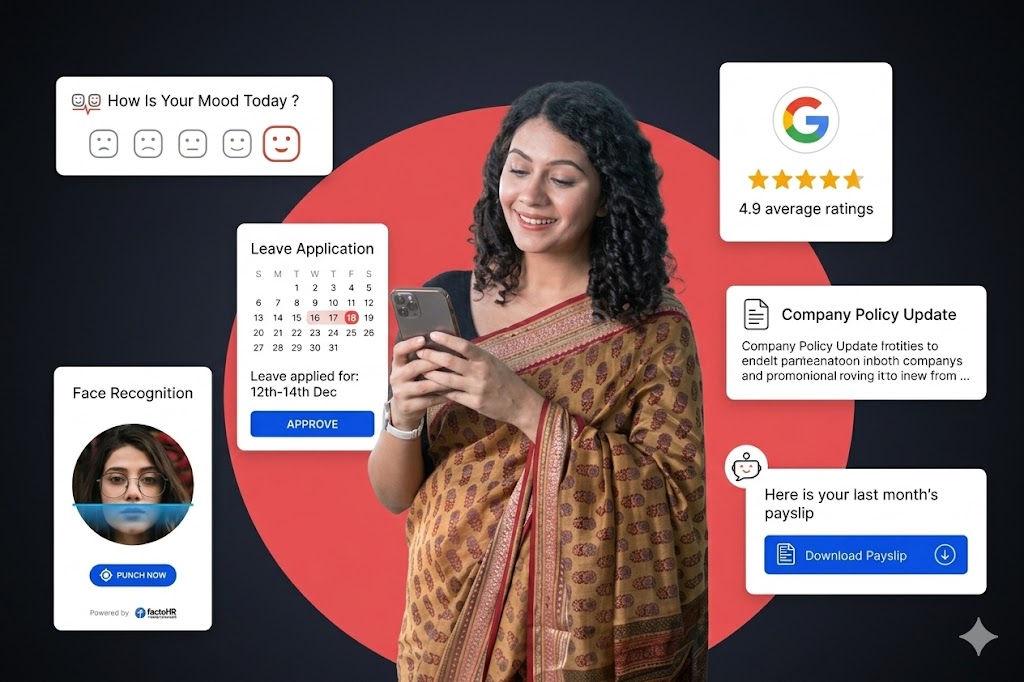
In many HR departments, managing employee leave still involves a lot of manual work.
Flipping between spreadsheets and calendars, trying to make sure everything adds up? It’s not easy. Leave management, often seen as a straightforward administrative task, can quickly become a complex challenge without the right tools. It’s not just about tracking days off; it’s about balancing operational needs, ensuring legal compliance, and maintaining employee satisfaction.
But what if there was a way to turn this chaos into order, ensuring that no leave request falls through the cracks while assuring compliance and keeping employee morale in check?
A leave management system is the solution to this challenge. It not only keeps tabs on every single leave request but also seamlessly syncs with your HRMS. In this blog, we delve deeper into why leave management systems are crucial, exploring their benefits for productivity, compliance, and employee satisfaction.
What is a leave management system?
A leave management system (LMS) is a software solution that automates the entire process of managing employee leave requests within an organization. From the moment an employee applies for leave to the final approval and recording, it automates these steps, ensuring accuracy and efficiency. It provides both managers and employees with real-time access to leave balances and statuses, making the whole process smooth and transparent.
7 reasons you need a leave management system
A leave management system makes tracking time off simple and efficient for all parties involved. An LMS keeps everything in one place – leave requests, approvals, and records,simplifying how employees apply for leave and how managers handle those requests. . Moreover, it helps avoid confusion over leave balances and policies ensuring that staff isn’t overworked by covering for others unexpectedly, and keeps the business compliant with labor laws. Basically, it streamlines the entire leave management process, reducing time and stress for both employees and managers.
Here’s a more detailed breakdown of why an LMS is indispensable:
1. Accuracy and transparency:
An LMS automates leave tracking, ensuring records of leave balances and histories are kept accurately. This transparency helps in eliminating confusion over accrued leave and policies, building a foundation of a trust between employees and employers.
2. Efficiency in processing
Gone are the days of back-and-forth emails and piles of paperwork for a simple leave request. A leave management system simplifies the application and approval process, making it quick and seamless. This cuts down the administrative burden and time, previously lost to manual tracking and paperwork.
3. Legal compliance made easy
It aids in adhering to the local and national labor laws by automating leave accruals according to the legal standards. This minimizes the risk of legal penalties due to non-compliance.
4. Reduction in workload overlaps
A common headache for any team is finding out too late that several key members are scheduled to be off at the same time. By providing a clear overview of who is on leave and when, an LMS helps in planning and distributing workloads. This helps maintain uninterrupted operations and prevents any unexpected drops in productivity.
5. Enhanced employee satisfaction
Employees value a leave process that is both simple and equitable.. When they see that their leave requests are handled with fairness and transparency, it contributes to a positive workplace culture.
6. Data-driven decisions
A robust LMS doesn’t just manage leave; it also offers valuable insights into leave trends within the organization. With this data, management can spot patterns , like high-demand leave periods and plan accordingly to ensure productivity doesn’t dip.
7. Integration capabilities
Modern LMS solutions are designed to integrate well with other HR and payroll systems, creating a unified ecosystem for managing employee data. This means information flows smoothly from one system to another, cutting down on manual data entry and reducing the risk of errors. This integration capability not only streamlines HR processes, but also eliminates data silos.